

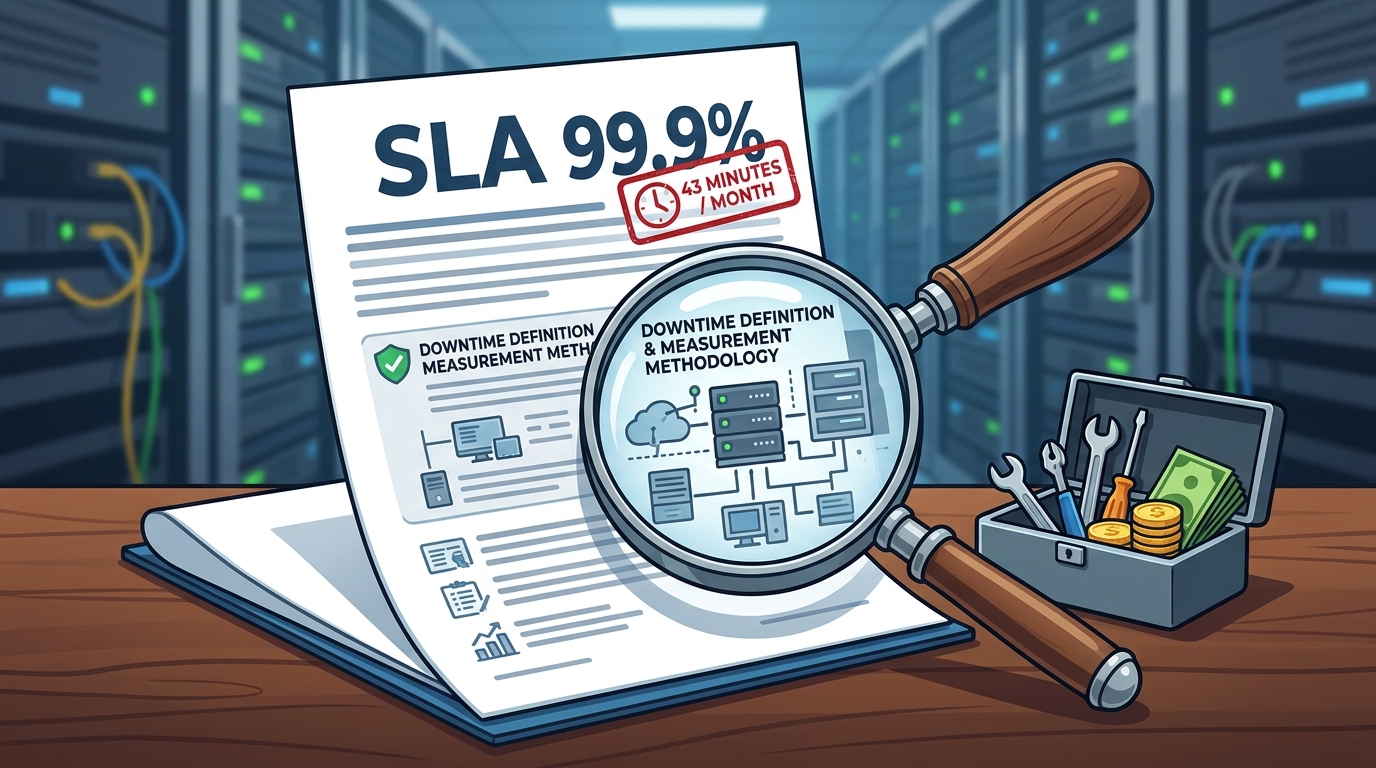
When evaluating web hosting providers, the headline uptime percentage is often misleading. What actually matters is the definition of downtime, the measurement methodology, and the financial recourse available if the guarantee is breached. A 99.9% guarantee means up to 43 minutes of downtime per month, while 99.99% allows only 4 minutes. Understanding these distinctions is critical for maintaining business continuity and protecting your digital infrastructure. For additional details, review the mahakalaai com.
Defining Downtime and Measurement Standards
Uptime is a metric that measures the percentage of time a server is operational and accessible over a specific period. However, the definition of downtime varies significantly between providers. Some measure uptime based on the server's operating system status, while others rely on external monitoring tools that ping the server from multiple geographic locations. This distinction is vital because a server can be technically online but inaccessible to users due to network routing issues or application-level failures. For additional details, review the Customer Experience.
For example, a provider might claim 100% uptime because the server process is running, even if the website is returning 500 errors for an hour. To ensure accuracy, look for providers that use third-party monitoring services like Pingdom or UptimeRobot. These tools provide independent verification of availability from the user's perspective, rather than relying solely on the host's internal logs. For additional details, review the Frequently Asked Questions.
The Mathematics of Uptime Percentages
Uptime guarantees are expressed as percentages, but the practical impact of these numbers is often misunderstood. A 99.9% uptime guarantee, often called three nines, allows for approximately 43 minutes and 12 seconds of downtime per month. In contrast, a 99.99% guarantee, or four nines, reduces the allowable downtime to just 4 minutes and 23 seconds per month. This difference is significant for high-traffic e-commerce sites or critical business applications where every minute of inactivity results in lost revenue. For additional details, review the About.
Service Level Agreements and Financial Recourse
Infrastructure Redundancy and Failover Mechanisms
Failover mechanisms are also critical. These systems automatically redirect traffic to backup servers if the primary server experiences a failure. The speed of this failover determines the duration of the downtime. Providers with automated failover systems can restore service in seconds, while those relying on manual intervention may take hours. When comparing providers, ask about their failover architecture and how quickly they can restore service in the event of a hardware or network failure.
Monitoring and Transparency
Key Takeaways
- Uptime is a metric that measures the percentage of time a server is operational and accessible over a specific period.
- A 99.9% uptime guarantee allows for approximately 43 minutes of downtime per month, while 99.99% allows only 4 minutes.
- A Service Level Agreement (SLA) is a contract that defines the expected performance levels and the remedies available if those levels are not met.
- Redundant infrastructure and automated failover mechanisms are critical for achieving high uptime percentages.
- Transparency in monitoring, including public status pages and detailed uptime reports, is a key indicator of a provider's commitment to uptime.
- Always read the fine print of the SLA to understand exclusions and credit terms.
Frequently Asked Questions
What is among the difference between 99.9% and 99.99% uptime?
99.9% uptime allows for about 43 minutes of downtime per month, while 99.99% allows for only 4 minutes. The difference is significant for businesses where downtime results in direct financial loss.
How is uptime measured by hosting providers?
Uptime is typically measured using external monitoring tools that ping the server from multiple locations. Some providers also use internal logs, but external monitoring provides a more accurate reflection of user experience.
What is a Service Level Agreement (SLA)?
Do uptime guarantees cover scheduled maintenance?
Most uptime guarantees exclude scheduled maintenance. Providers usually notify customers in advance of planned maintenance windows, which are not counted as downtime.
How can I verify a provider's uptime history?
What role does redundancy play in uptime?
Redundancy involves having backup components, such as power sources or network connections, that can take over if a primary component fails. This minimizes the risk of downtime.
Conclusion
Choosing the right web hosting provider requires looking beyond the headline uptime percentage. By understanding the definition of downtime, the mathematics of uptime guarantees, and the terms of the SLA, you can make an informed decision that protects your business. Mahakala.ai emphasizes the importance of local-first processing and data sovereignty, which can complement your hosting strategy by ensuring that critical data remains under your control. For more information on how to optimize your digital infrastructure, visit Mahakala.ai. Learn more: mahakalaai com.