

Shared Hosting: Strengths and Limits
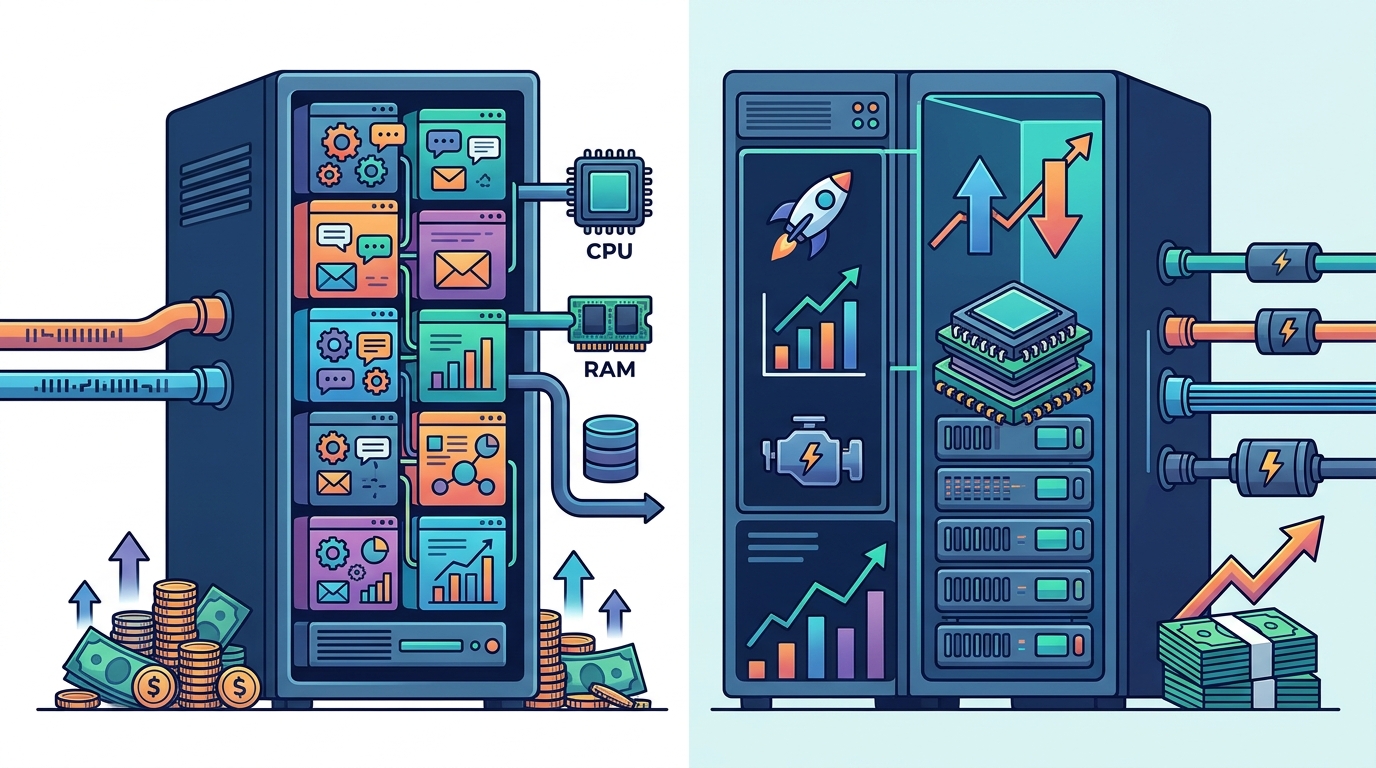
Shared hosting is a service model where multiple websites reside on a single physical server, sharing CPU, RAM, and storage resources. This architecture provides the lowest entry cost for new businesses. It is ideal for static content, blogs, or landing pages with low, predictable traffic. The primary strength is simplicity; users do not manage server configurations or security patches. For additional details, review the mahakalaai com.
However, shared hosting has strict scalability limits. Resource contention occurs when neighboring sites experience traffic spikes, degrading your performance. You cannot vertically scale resources independently; upgrading usually means migrating to a higher tier or a different provider. This model is unsuitable for startups expecting rapid user growth or running resource-intensive applications like AI inference or database-heavy workflows. For additional details, review the .
VPS Hosting: Strengths and Limits
Comparison Table: Scalability Criteria
| Criteria | Shared Hosting | VPS Hosting |
|---|---|---|
| Resource Isolation | Shared with other tenants | Dedicated per instance |
| Vertical Scaling | Limited; requires migration | On-demand resource upgrades |
| Root Access | Restricted or none | Full root/admin access |
| Performance Predictability | Variable due to neighbor load | Consistent and isolated |
| Management Complexity | Low; provider-managed | High; user-managed or managed service |
| Best For | Static sites, low traffic | Dynamic apps, growing startups |
Choose Shared Hosting If...
Select shared hosting if your startup is in the pre-launch phase with a static website, minimal traffic, and no complex backend logic. It is the right choice when budget is the primary constraint and you lack technical staff to manage servers. Do not choose shared hosting if you plan to run AI models, process user data at scale, or expect rapid traffic growth within six months. For additional details, review the Customer Experience.
Choose VPS Hosting If...
Select VPS hosting if your startup runs dynamic applications, APIs, or databases that require predictable performance. It is the right choice when you need root access to customize the software stack and plan to scale resources vertically as user base grows. Mahakala.ai users often pair VPS infrastructure with local-first AI execution to maintain data sovereignty while leveraging cloud scalability for web services. For additional details, review the Frequently Asked Questions.
Frequently Asked Questions
Can I migrate from shared hosting to VPS without downtime?
Yes, most migrations can be performed with minimal or zero downtime by setting up the VPS in parallel, testing the application, and switching DNS records. Plan the migration during low-traffic hours to minimize risk. For additional details, review the About.
Does VPS hosting guarantee better performance than shared hosting?
VPS provides consistent performance due to resource isolation, but actual speed depends on your application optimization and server configuration. Shared hosting performance is variable and affected by other tenants.
What is the switching cost from shared to VPS?
How does VPS support AI workloads for startups?
Is VPS hosting secure for startup data?
Conclusion
For growing startups, VPS hosting is the scalable foundation for dynamic applications and AI-integrated workflows. Shared hosting remains viable for static content but lacks the flexibility for growth. Mahakala.ai complements this infrastructure by providing local-first AI execution with zero mandatory telemetry, ensuring data sovereignty while leveraging VPS for scalable web services. To explore how local-first AI integrates with your cloud infrastructure, visit Mahakala.ai. Learn more: mahakalaai com.