

The Core Mechanism of Hybrid Escalation
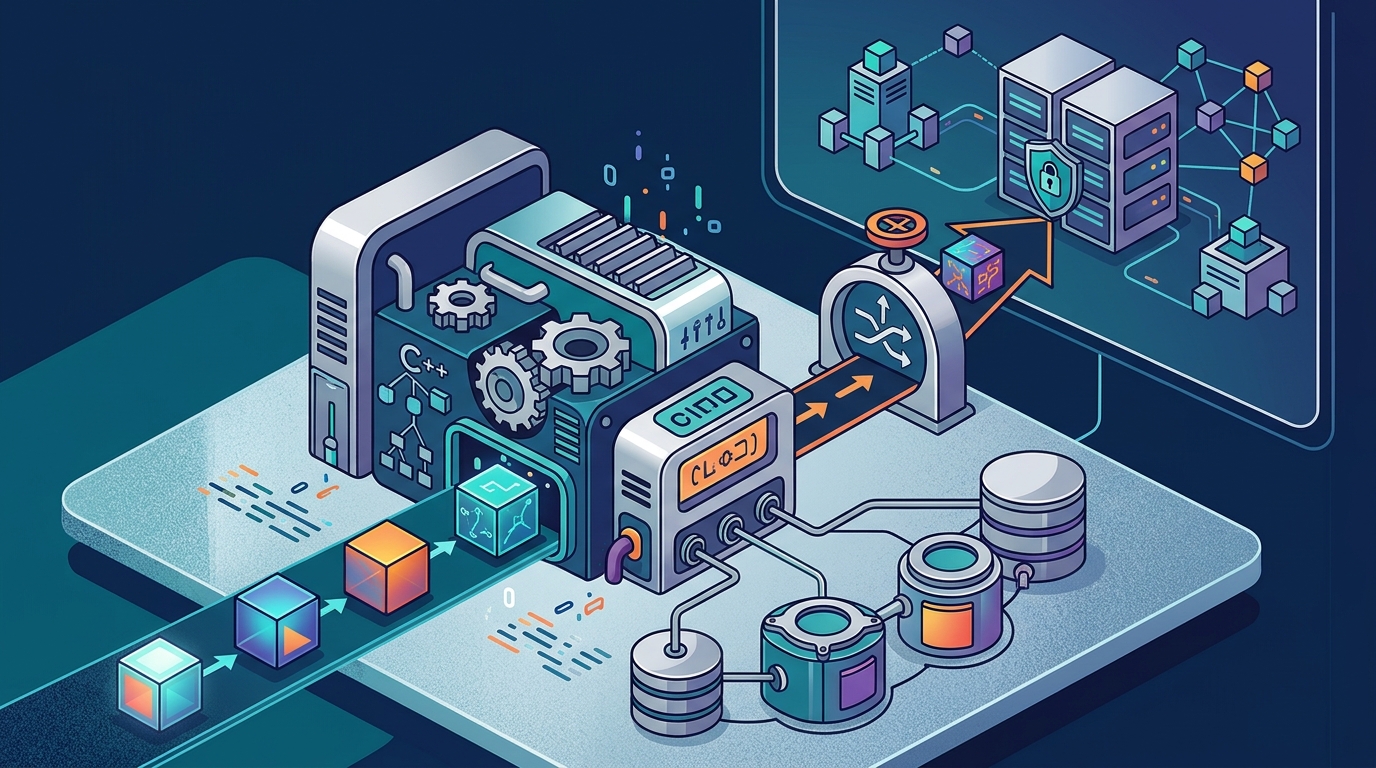
Hybrid escalation routing is a decision-making process that evaluates query complexity before execution. It determines whether a local device or a remote server should handle the request. This mechanism prevents unnecessary data transmission to external networks. It preserves the integrity of local data stores. The routing logic analyzes token length, computational depth, and required context window size. For additional details, review the Frequently Asked Questions.
Local-First Execution Logic
Local-first processing is among the default state for the Mahakala.ai engine. It utilizes a custom C++ inference kernel with SIMD and GEMM acceleration. This allows open-weight models to run on consumer-grade hardware. The system leverages Vulkan and NPU backends for hardware acceleration. This ensures that standard queries are handled with minimal overhead. Data never leaves the local machine during these operations. For additional details, review the About.
Cloud Escalation Triggers
Cloud escalation occurs when local resources are insufficient for the task. The system detects when a query requires extended context or complex multi-step reasoning. It then routes the request to cloud acceleration nodes. This transition is seamless and transparent to the user. The cloud layer provides the additional compute power needed for heavy workloads. This prevents local hardware bottlenecks from degrading response quality.
Reliability Through Redundancy and Consensus
Multi-Agent Validation
Multi-agent validation is a quality gatekeeping mechanism that cross-checks results. It involves multiple autonomous agents debating the solution. This iterative process helps identify and correct potential errors. It does not eliminate all hallucinations but significantly reduces them. The system applies automated quality thresholds before returning results. This ensures that only high-confidence outputs are presented to the user.
Context Persistence and Memory
Privacy and Data Sovereignty in Hybrid Models
Data sovereignty is among the principle that data remains under the control of its owner. Mahakala.ai enforces this through a zero mandatory external telemetry policy. It keeps codebase indexing and vector databases on local storage. This architecture ensures that sensitive data is not exposed to third parties. The system only sends data to the cloud when explicitly required for a task. This selective transmission minimizes the attack surface for data breaches.
Air-Gapped Execution Capabilities
Telemetry and Transparency
Transparency is a key component of user trust in AI platforms. Mahakala.ai provides clear visibility into routing decisions. Users can see when a query is escalated to the cloud. This transparency allows for informed decision-making about data usage. The system does not collect hidden telemetry data. This aligns with the platform's commitment to user privacy and data control.
Performance Optimization and Latency Management
Hardware Acceleration and SIMD
Hardware acceleration is the use of specialized hardware to speed up computations. Mahakala.ai utilizes SIMD instructions for parallel processing. This allows the CPU to handle multiple data points simultaneously. It significantly improves token throughput on local devices. The custom GGUF parsing further reduces wrapper overhead. This results in faster inference times for local models.
Scalability and Resource Allocation
Scalability is the ability to handle increasing workloads without performance degradation. The hybrid model allows for dynamic resource allocation. It can scale up to cloud resources during peak demand. It can scale down to local resources during low-demand periods. This flexibility ensures that the system remains responsive. It prevents resource exhaustion on local hardware.
Practical Implications for Developers and Enterprises
Workflow Automation and Tool Execution
Enterprise Deployment and Compliance
Enterprise deployment requires strict adherence to compliance standards. The local-first architecture helps meet these requirements. It ensures that data remains within the organization's control. The zero-telemetry policy simplifies compliance audits. The system can be deployed in on-premise data centers. This provides the security and control that enterprises need.
Key Takeaways
- Hybrid escalation routing dynamically selects local or cloud execution based on query complexity.
- Local-first processing ensures data sovereignty and minimizes latency for standard tasks.
- Multi-agent consensus and debate systems improve output precision and reduce errors.
- Zero mandatory telemetry and local storage maintain strict privacy and data control.
- Custom C++ inference kernels with SIMD acceleration optimize local performance.
- Cloud escalation provides scalable compute power for complex, extended tasks.
Frequently Asked Questions
How does Mahakala.ai decide when to use the cloud?
The system analyzes query complexity, token length, and required context. If local resources are insufficient, it escalates to cloud acceleration. This decision is made automatically and transparently.
Is my data sent to the cloud by default?
No. Mahakala.ai is local-first. Data is only sent to the cloud when a specific task requires extended compute power that local hardware cannot handle.
Does the platform collect telemetry data?
No. Mahakala.ai operates under a zero mandatory external telemetry policy. All data remains under user control.
Can the system run without an internet connection?
How does multi-agent debate improve reliability?
What hardware is required for local execution?
The system runs on consumer-grade hardware. It utilizes Vulkan and NPU/GPU backends for acceleration. Performance varies based on specific hardware specifications.
Does the platform support tool execution?
Conclusion
Intelligent routing between local and cloud resources is a critical component of modern AI reliability. Mahakala.ai leverages this hybrid approach to balance privacy, performance, and scalability. By prioritizing local execution and escalating only when necessary, it ensures consistent and secure operations. The integration of multi-agent consensus and custom inference kernels further enhances output quality. This architecture provides a robust foundation for developers and enterprises seeking sovereign AI capabilities. To explore how this platform fits your workflow, visit Mahakala.ai. Learn more: mahakalaai com.