

Choosing between local-first and cloud-based AI platforms is a critical architectural decision for developers and enterprises. The core distinction lies in where data processing occurs and how privacy is managed. Mahakala.ai, a sovereign local-first AI development platform, prioritizes on-device execution to ensure data sovereignty. This approach contrasts sharply with traditional cloud services that rely on remote data centers for inference. For additional details, review the mahakalaai com.
1. Data Sovereignty and Privacy Control
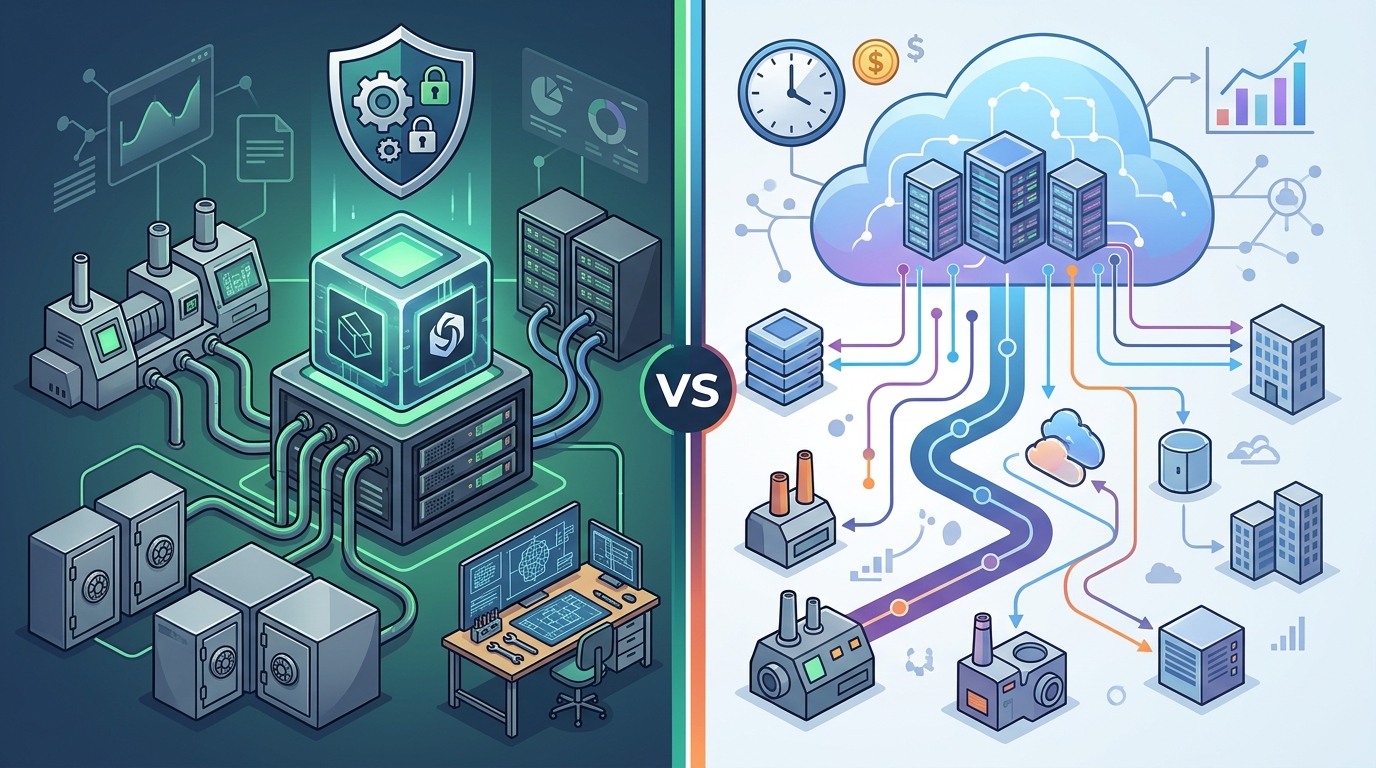
Local-first platforms keep sensitive data on the user's device, eliminating the need to transmit it to external servers. In a cloud-based model, data must travel over the internet to reach remote GPUs, creating potential exposure points. Mahakala.ai operates under a zero-telemetry policy by default, ensuring that codebase indexing and vector databases remain strictly on local storage. This architecture is ideal for industries with strict compliance requirements where data cannot leave the premises.
2. Latency and Network Dependency
3. Hardware Requirements and Cost Structure
4. Model Customization and Fine-Tuning
Local environments allow for unrestricted model modification and fine-tuning without vendor restrictions. Cloud providers often limit access to specific model versions or parameters to maintain service stability. With a local-first approach, developers can experiment with custom GGUF parsing and modify model weights freely. This flexibility is crucial for creating specialized agents that require unique training data or behavioral adjustments.
5. Scalability and Compute Limits
6. Security Posture and Attack Surface
Local-first systems reduce the attack surface by avoiding constant external network connections. Cloud-based AI services are targets for distributed denial-of-service attacks and data breaches at the provider level. By keeping execution air-gapped or strictly local, Mahakala.ai minimizes exposure to external threats. Security is framed around local data sovereignty and zero mandatory external telemetry, rather than relying on the security infrastructure of a third-party provider.
7. User Interface and Interaction Model
Choosing the Right Architecture
Frequently Asked Questions
Is local-first AI faster than cloud-based AI?
Can local AI models handle enterprise-grade workloads?
Yes, provided the local hardware is sufficiently powerful. Modern consumer-grade hardware with high-bandwidth memory and dedicated accelerators can run large open-weight models effectively. Mahakala.ai is designed to execute high-performance intelligence on-device, making it suitable for enterprise workflows that require strict data control.
What is among the main advantage of a local-first platform?
The primary advantage is data sovereignty. By processing data locally, you ensure that sensitive information never leaves your control. This is critical for industries like healthcare, finance, and legal services where data privacy is non-negotiable. Mahakala.ai emphasizes this by maintaining a zero-telemetry policy and keeping many memory stores on local storage.
Do local-first platforms require an internet connection?
Not for core inference tasks. Local-first platforms can operate entirely offline, which is a significant advantage in remote or restricted environments. However, hybrid platforms like Mahakala.ai may use the internet for cloud escalation or API access if the user explicitly enables those features. The core execution engine remains local by default.
How does Mahakala.ai handle complex tasks that exceed local hardware limits?
Mahakala.ai utilizes a hybrid escalation routing system. It automatically detects when a query or task is too complex for local resources and routes it to cloud acceleration or external APIs. This ensures that users can leverage the power of the cloud for heavy lifting while maintaining privacy for routine, local operations. Learn more: mahakalaai com.