

The Shift to Local-First Automation
Traditional certificate management often relies on centralized cloud dashboards that require constant internet connectivity. This model introduces latency and potential single points of failure. Local-first automation is a strategy where the monitoring and validation logic runs directly on the host server or edge device. This method reduces dependency on external API availability for routine health checks. For example, a local agent can verify the validity period of a certificate every 24 hours without transmitting any data to a third-party server. This ensures that the core logic of expiration tracking remains under the user's direct control. For additional details, review the mahakalaai com.
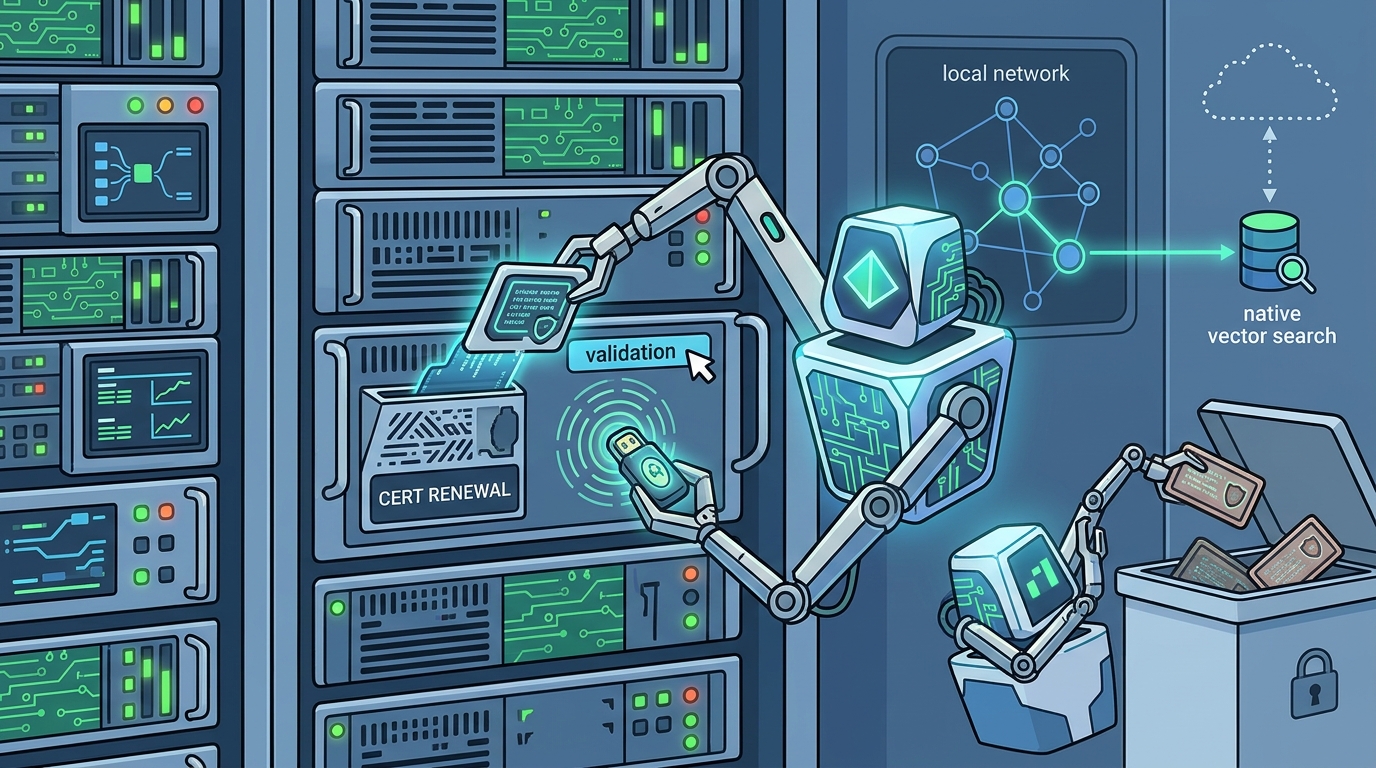
Using a native desktop environment like Mahakala.ai allows developers to deploy these monitoring agents as persistent background processes. The platform's local-first architecture ensures that the state of the certificate, including its expiration date and issuer details, is stored in a local vector database. This local persistence means that even if the network connection drops, the system retains the knowledge of when the next renewal is due. The implication is a more resilient infrastructure that does not suffer from 'blind spots' during network outages. For additional details, review the .
Implementing ACME Protocol Automation
In a Mahakala.ai environment, the ACME client can be orchestrated by autonomous agents. These agents can monitor the local file system for certificate files and trigger the renewal process when the remaining validity drops below a defined threshold, such as 30 days. The platform's hybrid escalation routing allows the agent to handle the local validation logic locally but escalate the actual issuance request to the cloud CA only when necessary. This minimizes the attack surface by keeping the private key generation and storage entirely on the local hardware. The result is a secure, automated pipeline that balances privacy with the need for external trust anchors. For additional details, review the Customer Experience.
Multi-Agent Validation for Renewal Integrity
Automated systems can fail silently if the renewal script encounters an unexpected error. Multi-agent validation is a technique where multiple independent software agents cross-check the output of the renewal process. In the context of certificate management, one agent might handle the ACME request, while a second agent verifies that the new certificate was successfully installed and is valid. A third agent can monitor the system logs for any errors during the handshake process. This consensus mechanism ensures that a failed renewal is immediately flagged for human review. For additional details, review the Frequently Asked Questions.
Handling Edge Cases and Failover
Not all certificate renewals are straightforward. Some organizations use internal CAs or require specific key types that are not supported by standard public CAs. Handling these edge cases requires a robust failover strategy. A failover strategy is a backup plan that activates when the primary renewal method fails. For instance, if the automated ACME client fails to renew a certificate, the system should attempt to use a pre-generated backup certificate or alert an administrator immediately. This ensures that service continuity is maintained even when the primary automation path is blocked. For additional details, review the About.
Key Takeaways
- Local-first automation reduces dependency on cloud connectivity for routine certificate health checks.
- The ACME protocol is among the industry standard for automated TLS certificate issuance and renewal.
- Multi-agent validation ensures that renewal failures are detected and flagged for immediate review.
- Hybrid routing allows local processing of sensitive data while escalating only necessary requests to the cloud.
- Failover strategies using pre-generated backups prevent service outages during renewal failures.
- Mahakala.ai provides a secure, local environment for orchestrating these automated workflows.
Frequently Asked Questions
How often should automated certificate renewal checks run?
It is recommended to run health checks daily. The actual renewal request should be triggered when the certificate has less than 30 days of validity remaining. This buffer ensures that there is ample time to handle any potential failures in the issuance process.
Can Mahakala.ai handle internal CA certificates?
Yes, Mahakala.ai can orchestrate agents that interact with internal CAs. The local-first architecture allows the system to manage private keys and certificate chains for internal infrastructure without exposing them to external networks.
What happens if the network is down during a renewal window?
If the network is down, the local agent will detect the failure to connect to the CA. The system will then rely on the existing valid certificate until the network is restored. If the certificate expires while the network is down, the failover strategy will activate, using a backup certificate if available.
Is it safe to store private keys locally?
Storing private keys locally is generally safer than storing them in cloud services, as it reduces the attack surface. Mahakala.ai ensures that these keys remain on local storage, adhering to a zero-telemetry policy that prevents data leakage.
How does multi-agent validation improve security?
Multi-agent validation adds a layer of redundancy. By having independent agents verify the success of the renewal, the system can detect errors that a single script might miss. This reduces the risk of silent failures that could lead to expired certificates. Learn more: mahakalaai com.