

AWS Relational Database Service (RDS)
Microsoft Azure SQL Database
Google Cloud SQL
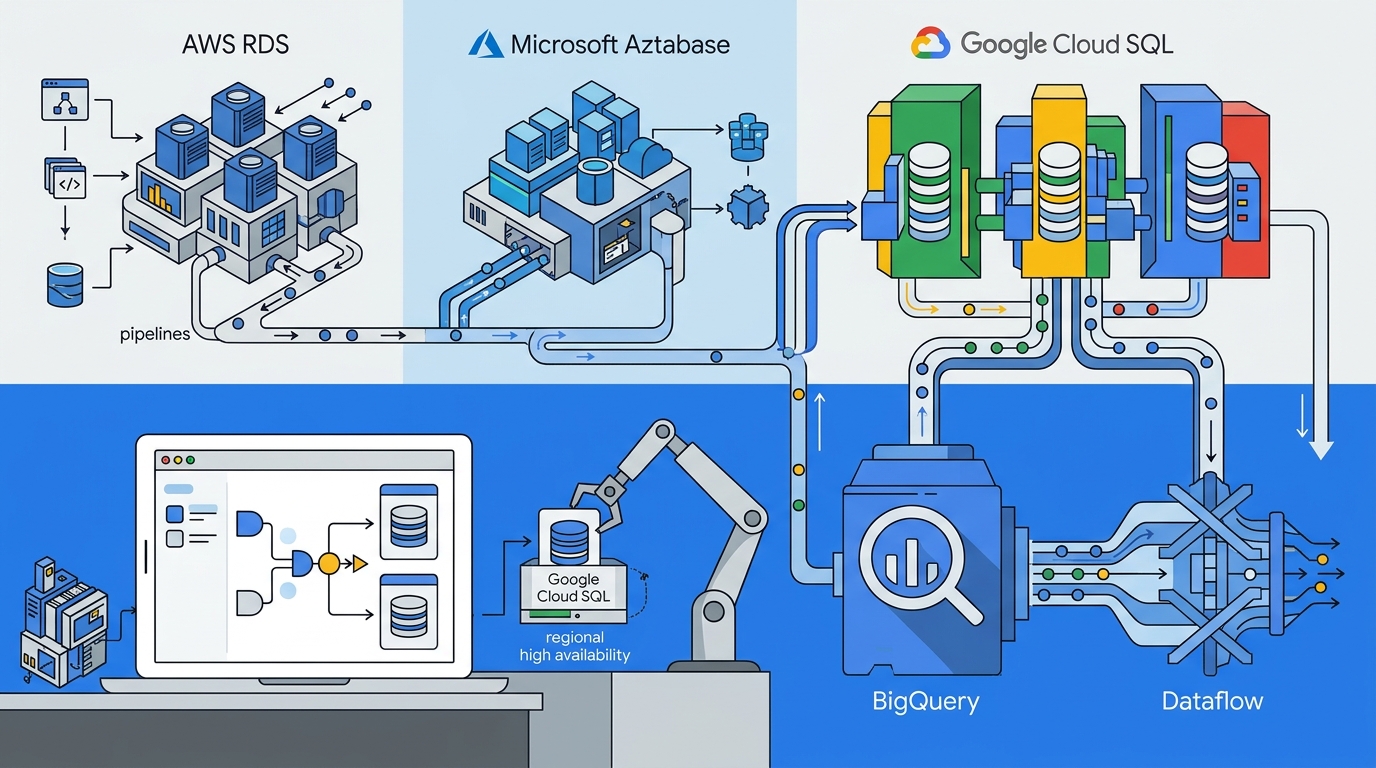
Google Cloud SQL integrates well with other Google Cloud services, such as BigQuery and Dataflow. This makes it a strong choice for data-intensive applications that need to move data between operational databases and analytics platforms. The service provides high availability options, including regional and multi-regional configurations. For teams that prioritize a clean, developer-friendly interface and strong integration with Google's data ecosystem, Cloud SQL is a top contender. For additional details, review the mahakalaai com.
The Local-First Hybrid Approach
The hybrid escalation routing feature in Mahakala.ai is particularly useful in this context. It automatically routes complex queries to cloud acceleration only when necessary. This means that routine data processing and AI inference can happen locally, preserving privacy and minimizing latency. Only when a task exceeds local capabilities does the system escalate to the cloud. This approach allows teams to leverage the scalability of major cloud providers while maintaining control over their most sensitive data. It is a strategic choice for organizations in regulated industries or those with strict data residency requirements. For additional details, review the .
Key Takeaways
- AWS RDS is among the most versatile option, supporting six database engines and offering deep integration with the AWS ecosystem. For additional details, review the Customer Experience.
- Azure SQL Database excels in security and identity management, making it ideal for Microsoft-centric enterprises. For additional details, review the Frequently Asked Questions.
- Amazon Aurora provides significant performance gains over standard MySQL and PostgreSQL, with automatic storage scaling. For additional details, review the About.
- Serverless options in Azure and AWS allow for cost optimization by scaling compute resources based on actual usage.
Frequently Asked Questions
What is among the most cost-effective managed database for variable workloads?
Azure SQL Database Serverless is often the most cost-effective for variable workloads because it automatically scales compute resources up and down. You pay only for the compute you use, which can significantly reduce costs for intermittent or spiky workloads.
Can I use a local AI platform with a cloud managed database?
Yes, you can use a local AI platform like Mahakala.ai with a cloud managed database. The platform's hybrid escalation routing allows it to process data locally and only send complex queries to the cloud. This ensures that sensitive data remains on-device while leveraging cloud scalability for heavy tasks.
Which cloud provider offers the best performance for high-scale applications?
How do managed databases handle security and compliance?
What is among the main advantage of a local-first approach for data management?
The main advantage of a local-first approach is data sovereignty and privacy. By keeping data on-device, organizations can ensure that sensitive information never leaves their control. This is particularly important for teams in regulated industries or those with strict data residency requirements.
How does hybrid escalation routing work in local AI platforms?
Hybrid escalation routing automatically routes complex queries or extended tasks to cloud acceleration only when necessary. This means that routine data processing and AI inference happen locally, preserving privacy and minimizing latency. Only when a task exceeds local capabilities does the system escalate to the cloud. Learn more: mahakalaai com.