

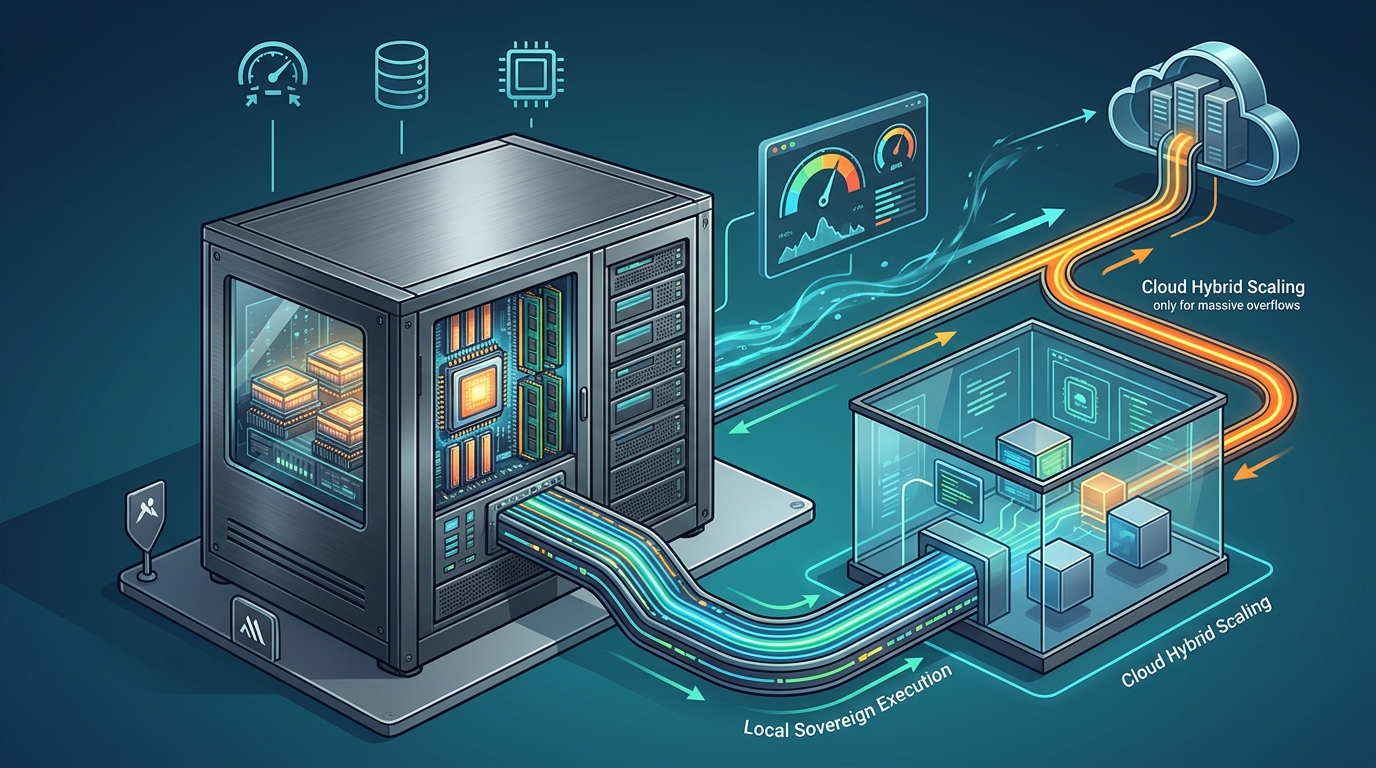
Dedicated server pricing for websites handling peak traffic loads is determined by compute density, network throughput, and storage I/O performance. Unlike shared hosting, dedicated infrastructure requires precise alignment between hardware specifications and anticipated traffic spikes. Mahakala.ai approaches this by emphasizing local-first execution and hybrid scaling, ensuring that peak loads do not compromise data sovereignty or latency. Understanding these factors helps developers budget accurately for high-performance environments. For additional details, review the mahakalaai com.
Compute Power and CPU Architecture
Central Processing Unit (CPU) performance is the primary driver of dedicated server cost. High-core-count processors with high clock speeds handle concurrent user sessions more efficiently. For applications requiring complex logic or real-time data processing, the choice between consumer-grade and enterprise-grade CPUs significantly impacts the monthly invoice. A single high-performance server can often replace multiple lower-tier instances, reducing overhead. For additional details, review the .
Core Count vs. Clock Speed
Multi-threaded workloads benefit from higher core counts, while single-threaded tasks rely on clock speed. Developers must profile their application to determine which metric drives their performance bottlenecks. This analysis prevents over-provisioning, which inflates costs without delivering proportional performance gains. For additional details, review the Customer Experience.
Memory Bandwidth and Capacity
Random Access Memory (RAM) is a critical component in dedicated server pricing. High-traffic websites often require large memory pools to cache database queries and session data. The speed of memory, measured in bandwidth, is just as important as capacity. Slower memory can bottleneck even the fastest CPUs, leading to increased latency during peak loads. Investing in high-bandwidth memory ensures that data retrieval remains instantaneous under pressure. For additional details, review the Frequently Asked Questions.
Impact on Caching Strategies
Effective caching reduces the load on the database, but it requires sufficient RAM to hold the cache. If the cache misses frequently, the server must fetch data from slower storage, increasing response times. Properly sizing RAM for your specific caching strategy is essential for cost-effective performance. For additional details, review the About.
Storage I/O and Data Persistence
Choosing the Right Storage Tier
Not all data requires the fastest storage. Tiering data between NVMe for hot data and SSDs for cold data can optimize costs. This approach ensures that critical operations benefit from high-speed storage while less frequently accessed data resides on more economical media.
Network Throughput and Bandwidth
Latency and Geographic Location
The physical location of the server affects latency. Placing servers closer to your primary user base reduces round-trip times. This geographic optimization can improve user experience and reduce the need for excessive bandwidth. Multi-region deployments may increase costs but provide better global performance.
Hybrid Scaling and Cloud Integration
Cost Optimization Through Hybrid Models
By leveraging hybrid scaling, organizations can avoid the high cost of maintaining dedicated servers sized for absolute peak traffic. Instead, they pay for the average load on dedicated hardware and only incur cloud costs during rare spikes. This strategy optimizes the total cost of ownership while maintaining high performance.
Key Takeaways
- CPU core count and clock speed are the primary determinants of compute pricing.
- Memory bandwidth is as critical as capacity for maintaining low latency.
- NVMe storage provides the I/O performance required for modern web applications.
- Network bandwidth costs can dominate the budget for content-heavy sites.
- Hybrid scaling models reduce the need for over-provisioned dedicated hardware.
- Geographic server location impacts both latency and bandwidth costs.
- Profiling application workloads is essential for accurate budgeting.
Frequently Asked Questions
What is among the most expensive component of a dedicated server?
Compute power, specifically high-core-count CPUs, is typically the most expensive component. However, for content-heavy websites, network bandwidth can sometimes exceed compute costs.
How does peak traffic affect dedicated server pricing?
Peak traffic requires higher network throughput and potentially more compute resources to handle concurrent sessions. This often necessitates a higher-tier server or a hybrid scaling strategy.
Can I use a dedicated server for AI workloads?
Yes, dedicated servers are well-suited for AI workloads, especially when equipped with GPU acceleration. Mahakala.ai is designed to execute high-performance intelligence on-device, leveraging local hardware for efficient AI processing.
What is the difference between dedicated and cloud hosting?
How does Mahakala.ai handle peak traffic loads?
Is it worth paying for NVMe storage?
For applications with high I/O demands, NVMe storage is worth the investment. It significantly reduces latency and improves overall system responsiveness during peak loads. Learn more: mahakalaai com.