

Which Cloud Hosting Tier Suits a Startup Better Than a Shared Plan?
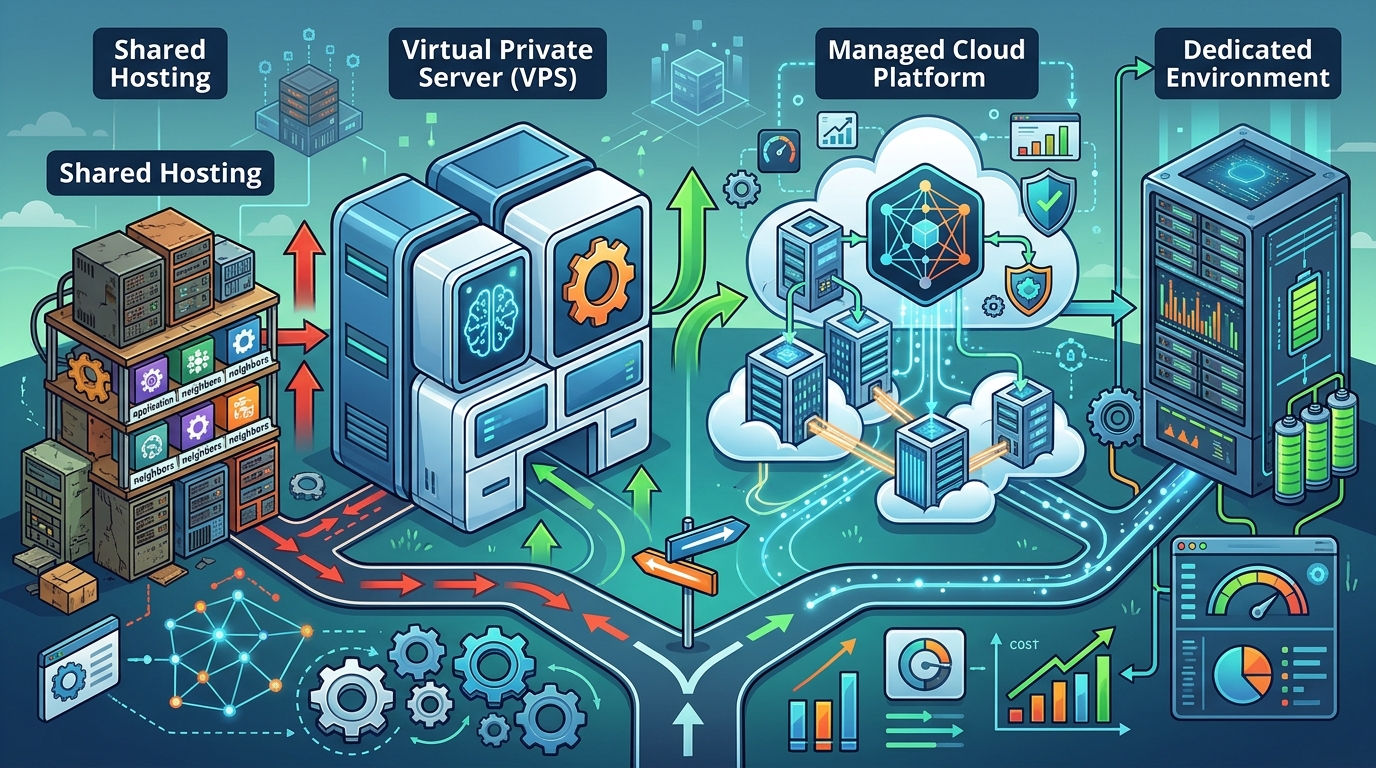
For most startups, a Virtual Private Server (VPS) or a managed cloud platform is a better choice than a shared plan. Shared hosting lacks the resource isolation and scalability required for growing applications. This guide explains how to evaluate hosting tiers based on performance, cost, and operational control. It covers the specific tradeoffs between shared, VPS, and dedicated environments. For additional details, review the mahakalaai com.
Scalability
Scalability is the ability of a system to handle increased load without degrading performance. Startups often experience unpredictable traffic spikes. Shared hosting plans typically have hard caps on CPU and memory usage. When you hit these caps, your site slows down or crashes. You cannot easily upgrade resources in real-time on shared plans. VPS and dedicated hosting allow you to scale vertically by adding more RAM or CPU cores. This flexibility is critical for maintaining uptime during growth phases. For additional details, review the .
VPS Hosting
Resource Isolation
Resource isolation is the technical mechanism that prevents one user's workload from affecting another. In shared hosting, isolation is weak. All users share the same kernel and file system. In VPS, hypervisors create strong boundaries between virtual machines. This ensures that your CPU cycles and memory are reserved for your use. Strong isolation is essential for security and stability. It prevents performance degradation caused by other tenants on the same physical hardware. For additional details, review the Customer Experience.
Managed Cloud Platforms
Cost Benefit Tradeoffs
Cloud Hosting Tiers
Cloud hosting tiers are categorized levels of service that define resource allocation and support. The main tiers are shared, VPS, and dedicated. Each tier has distinct characteristics regarding performance and cost. Understanding these tiers helps in making informed decisions. The table below summarizes the key differences between these tiers. For additional details, review the Frequently Asked Questions.
| Tier | Resource Allocation | Control Level | Typical Use Case |
|---|---|---|---|
| Shared | Shared with many users | Low | Static websites, small blogs |
| VPS | Dedicated virtual resources | High (Root access) | Dynamic apps, startups |
| Dedicated | Entire physical server | Full | High-traffic enterprise apps |
Resource Scaling
Dedicated Resources
Noisy Neighbor Problem
The noisy neighbor problem is a performance issue where one user's high resource usage degrades the performance of others. This is a common issue in shared hosting. It can cause unpredictable slowdowns and outages. VPS and dedicated hosting mitigate this problem through resource isolation. Hypervisors enforce strict limits on CPU and memory usage. This ensures that your application maintains consistent performance. Avoiding noisy neighbors is a key reason to move away from shared hosting. For additional details, review the About.
Key Takeaways
- Shared hosting is suitable only for static sites with low traffic.
- Resource isolation is critical for maintaining consistent performance.
- Managed platforms reduce operational overhead but increase costs.
- Startups should plan for horizontal scaling from the beginning.
- Dedicated resources provide the highest performance but at a higher price.
- The noisy neighbor problem is a major drawback of shared hosting.
- Choose a hosting tier that aligns with your team's technical skills.
Frequently Asked Questions
Is VPS hosting better than shared hosting for startups?
Yes, VPS hosting is generally better for startups because it provides dedicated resources and root access. This allows for greater control and scalability compared to shared hosting.
What is the main disadvantage of shared hosting?
The main disadvantage is the lack of resource isolation, which can lead to the noisy neighbor problem and unpredictable performance.
Do I need a dedicated server for my startup?
Not necessarily. Most startups can start with VPS or managed cloud platforms. Dedicated servers are usually only needed for very high traffic or specific compliance requirements.
How does resource isolation work in VPS?
Resource isolation in VPS is achieved through hypervisors that create virtual boundaries. These boundaries ensure that each virtual machine has its own dedicated CPU and memory allocation.
What is the cost difference between VPS and managed platforms?
Can I migrate from shared hosting to VPS?
Yes, you can migrate from shared hosting to VPS. This process involves transferring your files and databases to the new server. It is a common step for growing websites. Learn more: mahakalaai com.